

Prof. Zidong Wang, Brunel University London(Academician of Academia Europaea, IEEE Fellow)
Dr. Zidong Wang is currently Professor of Dynamical Systems and Computing in the Department of Computer Science, Brunel University London, U.K. His research interests include dynamical systems, signal processing, bioinformatics, control theory and applications. He has published 600+ papers in IEEE Transactions and 120+ papers in Automatica with an H-index of 155. He is a holder of the Alexander von Humboldt Research Fellowship of Germany, the JSPS Research Fellowship of Japan, William Mong Visiting Research Fellowship of Hong Kong. Prof. Wang serves (or has served) as the Editor-in-Chief for Neurocomputing, the Editor-in-Chief for International Journal of Systems Science, and an Associate Editor for 12 international journals including IEEE Transactions on Automatic Control, IEEE Transactions on Control Systems Technology, IEEE Transactions on Neural Networks, IEEE Transactions on Signal Processing, and IEEE Transactions on Systems, Man, and Cybernetics-Part C. He is a Member of the Academia Europaea, a Member of the European Academy of Sciences and Arts, an Academician of the International Academy for Systems and Cybernetic Sciences, a Fellow of the IEEE, a Fellow of the Royal Statistical Society and a member of program committee for many international conferences.

Prof. FangXiang Wu, University of Saskatchewan(Fellow of the Engineering Institute of Canada (EIC), IEEE/IET/AAIA Fellow)
Dr. FangXiang Wu is currently a full professor in the Departments of Computer Science, Division of Biomedical Engineering, and the Department of Mechanical Engineering at the University of Saskatchewan. He is a Fellow of the Engineering Institute of Canada (EIC) (for his exceptional contributions to artificial intelligence, computational biology, medical image analysis and complex bionetwork analytics), a Fellow of the Institute of Electrical and Electronics Engineers (IEEE) (for contributions to computational intelligence techniques for biomedical data analytics), a Fellow of the Institution of Engineering and Technology (IET), and a Fellow of the Asia-Pacific Artificial Intelligence Association (AAIA). He is a recipient of the University of Saskatchewan Distinguished Researcher Award (the institution’s highest research honor).
Dr Wu’s research interests include Artificial Intelligence, Machine/Deep Learning, Computational Biology, Health Informatics, Medical Image Analytics, and Complex Network Analytics. He has published over 500 journal/conference papers. His total Google scholar citations are over 20,100 and h-index is 77. Dr Wu is serving as the editorial board member of several international journals (including IEEE TCBB, Neurocomputing, etc.) and as the guest editor of numerous international journals, and as the program committee chair or member of many international conferences.
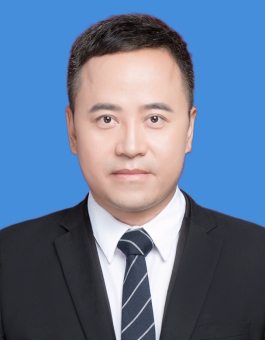
Prof. Zhuhong You, Northwestern Polytechnical University
You Zhuhong, professor and doctoral supervisor in the School of Computer Science of Northwestern Polytechnical University. He is a doctoral candidate of University of Science and Technology of China (USTC), a postdoctoral candidate of Tongji University and Hong Kong Polytechnic University, a recipient of the National Science Foundation for Outstanding Youth, a recipient of the 14th batch of National Specialized Experts of the Organization Department of the Central Committee of the CPC Central Committee (OCAC), a recipient of the National Science Foundation for Excellent Youth, and a recipient of the Xiangjiang Scholar Program of the Ministry of Human Resources and Social Affairs. He is also a recipient of the 14th batch of "National Special Experts" by the Ministry of Organization of China, the "Excellent Youth" Science Foundation of China, and the "Xiangjiang Scholars" program by the Ministry of Human Resources and Social Affairs. He is mainly engaged in the research of pattern recognition, big data analysis and bioinformatics, and has published in IEEE Repertoire, PLOS Computational Biology, Briefings in Bioinformatics, Bioinformatics and other domestic and international academic journals, as well as ISBRA, IJCNN, WCCI, BIBM, etc. He is also a member of the International Society of Bioinformatics, WCCI, BIBM and other international conferences, more than 350 research papers have been published, and more than 290 papers have been indexed by SCI. Among them, there are 192 SCI papers as first and corresponding authors, and 62 papers in the first region of Chinese Academy of Sciences. His papers have been cited nearly 15,000 times by international famous journals and conferences (Google Scholar), with H-index of 66, the highest number of citations for a single paper is 550, and 216 citations for a single paper are more than 10, 10 ESI highly cited papers, 3 hot papers, and he has been selected as one of the most highly cited scholars in the world for many times by Elsevier, Stanford University and the University of California at Los Angeles. He has been listed in Elsevier's "Highly Cited Scholars List" for many times, and is one of the top 2% scientists in the world in Stanford University. He has written one monograph and applied for 16 invention patents. He has been awarded the first prize of Provincial Natural Science Award (the 1st completer), the second prize of Natural Science Award of Ministry of Education (the 2nd completer), and the second prize of Natural Science Award of Chinese Society of Automation (the 3rd), and so on. He has served as an editorial board member and guest editorial board member of more than ten SCI journals and program committee member of many international conferences.
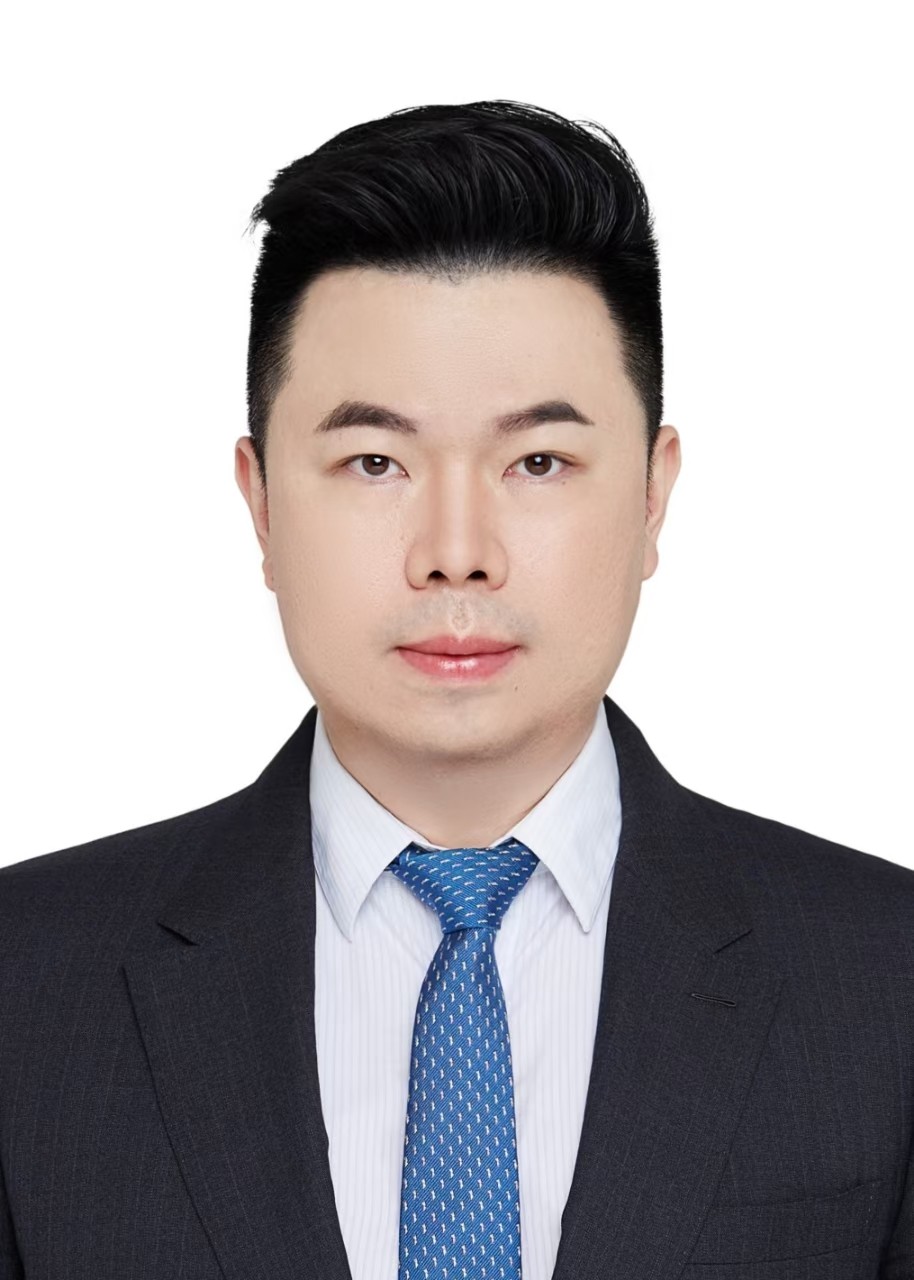
Prof. Xin Luo, Southwest University
Xin Luo (Fellow, IEEE) received the B.S. degree in computer science from the University of Electronic Science and Technology of China in 2005, and the Ph.D. degree in computer science from Beihang University in 2011. He is currently a Distinguished Professor of Data Science and Computational Intelligence’ and serving as the Dean of the College of Computer and Information Science, and the School of Software, Southwest University. He has authored or coauthored over 400 papers (including over 190 IEEE Transactions/Journal papers) in the areas of Artificial Intelligence and Data Science, receiving 20 000+ Google Scholar citations with the h-index of 86. Dr. Luo was the recipient of the Outstanding Associate Editor Award from IEEE Access in 2018, IEEE/CAA Journal of Automatica Sinica in 2020, and from IEEE Transactions on Neural Networks and Learning Systems in 2022–2024. He is currently serving as an Associate Editor for IEEE Transactions on Neural Networks and Learning Systems, and IEEE/CAA Journal of Automatica Sinica.
His Google Scholar page is given at the linkhttps://scholar.google.com/citations?user=hyGlDs4AAAAJ&hl=zh-CN

Prof. Dan Niu, Southeast University
Dan Niu (Member, IEEE) received the Ph.D. degree from the Graduate School of Information, Production and Systems, Waseda University, Japan, in 2013. He is now a Professor with the School of Automation, Southeast University. His research interests include verification technologies for nonlinear circuits and systems, LSI simulation technologies, and AI for EDA and AI for weather spatiotemporal sequence prediction.
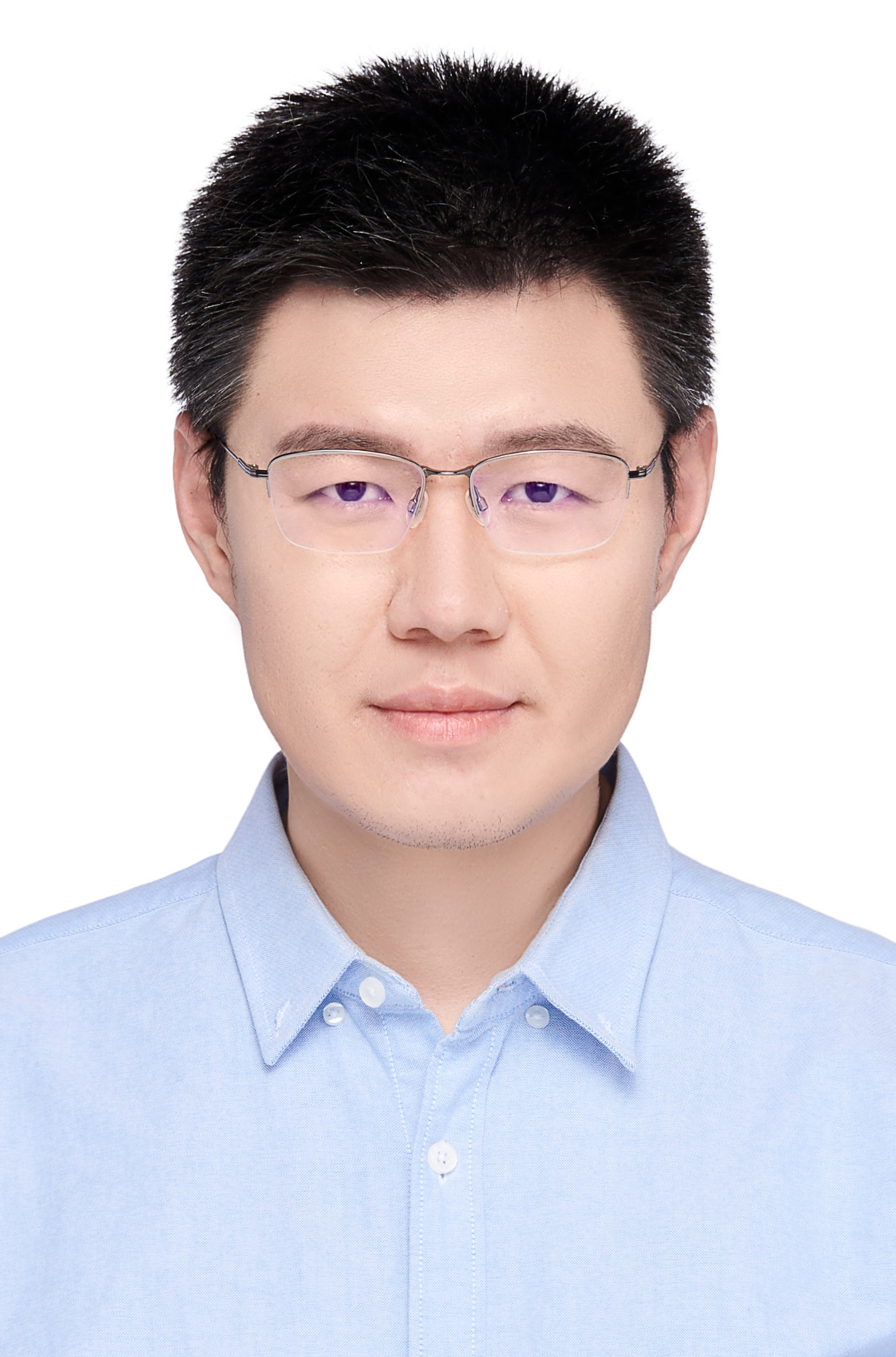
Prof. Qingchen Zhang, Hainan University
Qingchen Zhang received them PhD degree in software engineering from the Dalian University of Technology, China, in 2015. He is currently a professor with the School of Computer Science and Technology, Hainan University. He has conducted postdoctoral research and was an assistant professor with St. Francis Xavier University, Canada. His main research interests include machine learning, medical Big Data, and blockchain.

Prof. Quan Wang, Nanjing University of Aeronautics and Astronautics
Quan Wang is a Professor at the College of Automation Engineering, Nanjing University of Aeronautics and Astronautics, a Ph.D. supervisor, and a recipient of the National Overseas High-Level Young Talent Program. He began his studies at the School of Mathematical Sciences, Peking University, in 2002 and obtained his Ph.D. in Science from Peking University in 2012. Following his doctoral training, he conducted bioinformatics research at Vanderbilt University for over a decade. His research focuses on the bioinformatic analysis of human complex diseases, with particular emphasis on the integration of multi-omics data, the development of statistical and computational models, and the investigation of genetic mechanisms underlying complex diseases. He has served as principal investigator for multiple projects supported by the National Natural Science Foundation
of China. To date, he has published more than 40 peer-reviewed articles in leading international journals, including Nature Neuroscience, Advanced Science, Molecular Psychiatry, and Bioinformatics. His work has received over 2,000 citations and has attracted broad attention from major media outlets, including Xinhua News Agency and Fox News.
Research Fellow. Zemin Liu, Zhejiang University
Zemin Liu is a ZJU 100 Young Professor at the College of Artificial Intelligence, Zhejiang University, a Ph.D. supervisor, and a recipient of a national-level young talent program. His research interests lie in artificial intelligence, with a particular focus on multimodal foundation models, swarm intelligence, and graph representation learning. He has served as an Area Chair for leading AI conferences, including ICML, ICLR, NeurIPS, and WWW, as well as a Senior Program Committee (SPC) Member for the AAAI and IJCAI. He also serves as a reviewer for numerous top-tier conferences and journals in the field of artificial intelligence.

Assoc. Prof. Kaige Yan, Jilin University
Professor Yan Kaige has long been engaged in research on processor chip architecture design. He has made important achievements in processor reliability and GPU architecture design. He has published more than 30 high-level papers in top conferences and journals such as MICRO, TC, and TCAD, and has been granted 6 national invention patents. He has presided over 8 research projects, including the National Natural Science Foundation of China and Jilin Provincial Science and Technology Development Program. With rich industrial experience, he once worked as a CPU chip design engineer at ARM in the US, participated in the design of ARM’s new-generation processors, and led the design of a processor simulation platform for server operating systems. In 2017, he was awarded as a Class-A Overseas Talented Doctor introduced by Jilin University. In 2018, he was nominated for the Best Paper Award at DATE, a top conference in the EDA field, for discovering significant performance differences among GPU streaming multiprocessors caused by hardware variation and proposing targeted management strategies. He won the First Prize of Natural Science from Jilin Electrotechnical Society in 2023, and the Spring Editor’s Recommended Paper Award of FGCS (a CAS Zone 1 journal) as the first author in 2024.

Assoc. Prof. Zhenyu Yue, Anhui Agricultural University
Associate Professor at the School of Artificial Intelligence, Anhui Agricultural University. Recipient of the Youth Top-Notch Talent Program of Anhui Province. His research and teaching focus on artificial intelligence and bioinformatics. He has led over 10 research projects, including General Projects and Youth Projects of the National Natural Science Foundation of China, and has published more than 40 papers indexed by SCI/EI. He serves as Deputy Director of the Smart Agriculture Special Committee of the Anhui Association of Artificial Intelligence, Member of the Smart Agriculture Special Committee of the Chinese Association of Automation, Executive Member of the Youth Scholars Committee of the Bioinformatics Special Committee of the CCF, Member of the CCF Hefei Chapter, and Program Committee Member of the IEEE BIBM.